

Capture with context
Record the location, condition and access constraints. Attach photos, notes, readings and documents to the same issue.
Flagship product — in development
Building Analyst is being developed to connect site observations, photos and notes with professional evaluation and report preparation.
Professional review stays central. Capture Structure Draft for review
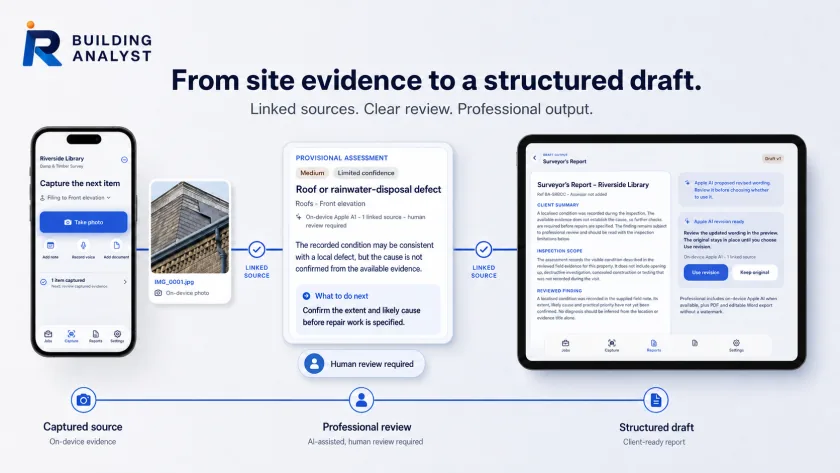
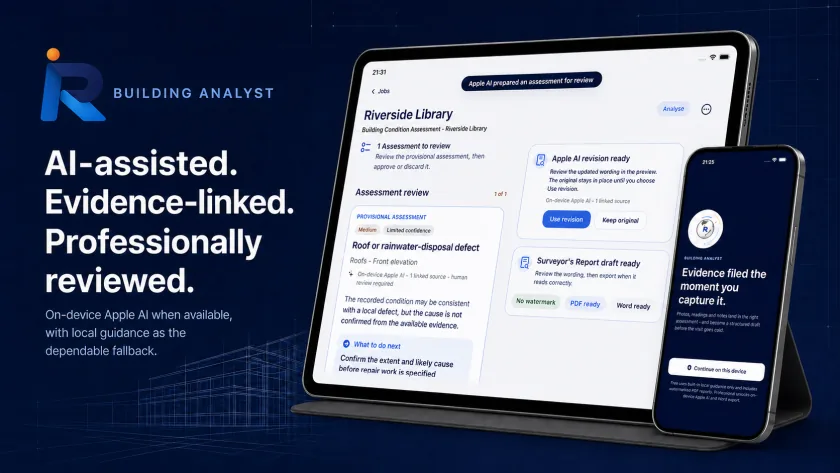
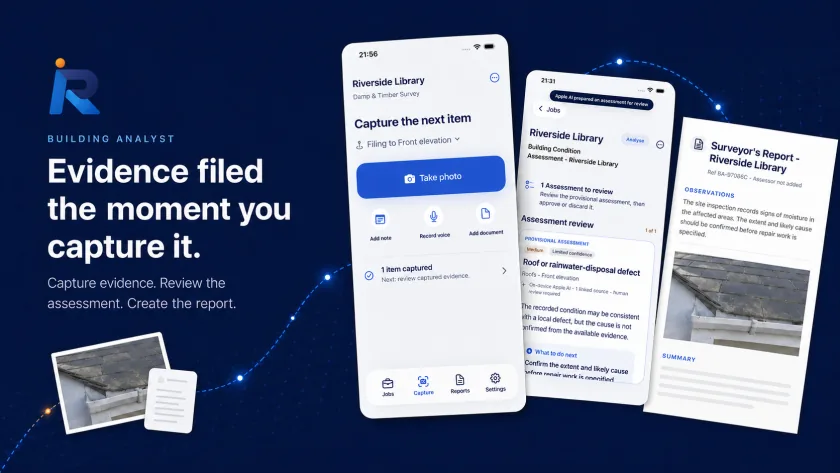
Product visuals
Marketing compositions based on current Building Analyst screens: capture evidence, review linked findings and prepare a report draft.

The workflow being developed
Keep each observation connected to its evidence, then turn checked findings into clearer report material.
Record the location, condition and access constraints. Attach photos, notes, readings and documents to the same issue.
Review the evidence, uncertainty and possible next actions. AI may help organise source-linked summaries and draft wording.
Approve, revise or reject the draft before client issue. The qualified professional remains responsible for the judgement and final report.
Frequently asked questions
No. It is the flagship Robson AI product in development. This site shows the workflow and direction without claiming a finished release.
The current direction is Apple-platform-first where that supports field work. This is a development direction, not a claim of App Store availability.
AI may help structure source-linked summaries and draft wording. It does not independently diagnose a building condition or decide what should be issued.
A qualified professional evaluates the evidence, checks context and uncertainty, and approves, revises or rejects client-facing findings.
This public site does not upload assessment data into Building Analyst. Product data-handling arrangements remain in development and will be documented before release.
No. They are separate products today. A connected evidence ecosystem is a future possibility, not a current capability.
Start a conversation
Tell Wayne how you capture evidence and prepare reports, and where the process slows you down. The aim is to identify where Building Analyst could support your work as development progresses. The button opens a draft in your email app.